Built from years of teaching PostgreSQL to working developers. Six courses, three tiers — from solid SQL foundations to production-grade data system design.
Now in early access — first 100 subscribers get 50% off.
Pricing locked in for life. Public launch follows on June 30, 2026.
Claim Your Spot — EARLY50From solid foundations to system design. Choose the level that matches your goals — Core, Advanced, or Architect. Each tier builds on the previous one, adding deeper capabilities and modules.
paid yearly
Early access — 50% off, first 100 only
Learn PostgreSQL the right way
Build a solid foundation in PostgreSQL by learning how to think in SQL, not just write it. This tier focuses on clarity, correctness, and essential patterns that make your queries easier to read, maintain, and extend.
You'll learn how to structure queries properly, use advanced SQL features with confidence, and avoid common pitfalls. This is the level where SQL stops being a tool and becomes a language you can rely on.
| All 6 courses: Window Functions, Aggregation, Schema Design, Advanced JOINs, Query Optimization, Read Query Plans | |
| 6 modules per course 36 modules total | |
| Hands-on labs and quizzes for every module | |
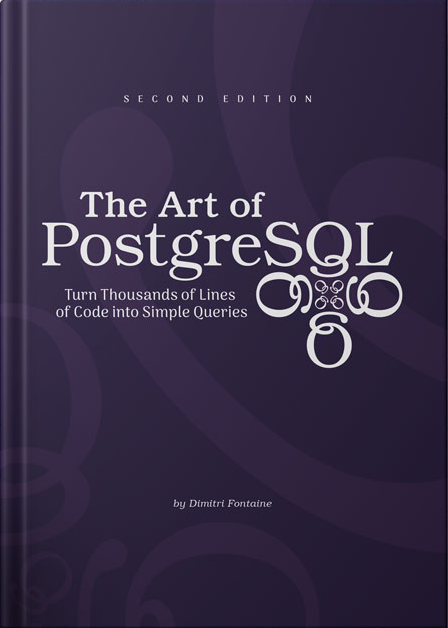
| The Art of PostgreSQL book included | |
| Money-back guarantee — no questions asked | |
| Lock in your 50% price for life |
No-questions-asked refund
paid yearly
Early access — 50% off, first 100 only
Understand performance and execution
Go beyond writing correct SQL and learn how PostgreSQL actually executes your queries. This tier focuses on performance: reading query plans, understanding the optimizer, and identifying bottlenecks.
You'll develop a systematic approach to making queries faster and more predictable. Instead of guessing, you'll understand why a query is slow and how to fix it using proven techniques.
| Everything in Core, plus: | |
| +1 advanced module per course 42 modules total | |
| Performance-focused depth: query plans, optimizer behavior, advanced indexing, join strategies | |
| Hands-on labs and quizzes for every module | |
| The Art of PostgreSQL book included | |
| Money-back guarantee — no questions asked | |
| Lock in your 50% price for life |
No-questions-asked refund
paid yearly
Early access — 50% off, first 100 only
Design systems that scale
At this level, PostgreSQL becomes part of your system design, not just a database. You'll learn how to model data, structure queries, and make architectural decisions that impact performance and scalability.
This tier focuses on trade-offs: when to denormalize, how to design for real workloads, and how to balance complexity, performance, and maintainability. It's about making decisions you can justify in production.
| Everything in Advanced, plus: | |
| +1 architect module per course 48 modules total | |
| System design depth: partitioning, large-scale schemas, performance budgeting, systemic diagnostics | |
| Hands-on labs and quizzes for every module | |
| The Art of PostgreSQL book included | |
| Money-back guarantee — no questions asked | |
| Lock in your 50% price for life |
No-questions-asked refund
The book gave you the SQL toolkit. The course shows you how to use it in production: when to denormalize, how to read query plans systematically, how to design schemas that actually scale.
Same author. Same teaching style. More depth, more practice, ongoing updates.
50% off applies to all tiers during early access.
Your book purchase counts toward the course as a separate value — no double-pay, no awkward upgrade dance.
Six courses covering SQL, performance, and system design.
Each tier builds on the previous — Advanced includes Core,
Architect includes everything.
New modules and courses are added over time and are all included in your yearly subscription.
Build solid SQL foundations
Understand performance
Design production systems
PARTITION BY, ORDER BY, frame clauses; ranking functions; running totals; replacing self-joins; common mistakes
Execution behavior; impact on sorting and memory; combining windows with aggregates; optimizing queries; practical limits
Windows vs pre-aggregation tables; schema design for analytics; windows vs materialized views; reporting pipelines; anti-patterns
GROUP BY semantics; HAVING vs WHERE; COUNT, SUM, AVG; handling NULLs; basic reporting
ROLLUP, CUBE; aggregation performance; incremental strategies; avoiding bugs
Reporting schemas; pre-aggregation trade-offs; materialized views; real-time vs batch decisions
Normalization fundamentals; primary/foreign keys; basic indexing; modeling for correctness
Index types; covering indexes; denormalization techniques; write vs read trade-offs
Partitioning strategies; multi-tenant models; schema evolution; flexibility vs performance
INNER, LEFT, RIGHT joins; join conditions; avoiding cartesian products; rewriting subqueries
LATERAL joins; join order; algorithm basics; reducing cost with indexing
Pre-joining vs on-demand; data duplication trade-offs; query decomposition; join-heavy workloads
Identifying slow queries; basic rewrite techniques; common anti-patterns; using indexes effectively
Predicate pushdown; reducing I/O and CPU; plan-driven rewrites; benchmarking and validation
Performance budgeting; query SLAs; caching trade-offs; designing for predictable performance
Reading EXPLAIN output; basic nodes (seq scan, index scan); identifying obvious bottlenecks; EXPLAIN ANALYZE safely
Cost vs actual; join strategies; buffer usage; detecting planner issues; guiding rewrites
Plans at scale; planner limitations; statistics management; diagnosing systemic performance issues
No theory for theory's sake. Every technique is immediately applicable to your work.
Content designed from years of consulting and real-world system optimization.
Skip the trial and error. Get the systematic approach that works.
Quizzes, downloadable resources, and hands-on exercises to reinforce learning.
The course includes The Art of PostgreSQL in full. You get the complete reference, always available as you go through the material.
✓ 400+ pages of deep PostgreSQL knowledge ✓ Real-world examples and exercises ✓ Lifetime access to the complete book
I'm capping early access at 100 paying subscribers OR June 30, 2026, whichever comes first. Once we hit either limit, the EARLY50 coupon stops working and the course goes to public pricing — Core $249, Advanced $349, Architect $449 paid yearly.
If you join now, your 50% price is locked in for as long as your subscription stays active — even when prices go up for everyone else.
They're complementary. The book is the reference; the course is the structured path that takes you from reading to applying. If you found the book useful, the course is the natural next step — and at 50% off, it's the cheapest it will ever be.
Two reasons. First, the curriculum, labs, and exercises are genuinely complete and useful today — slide decks (end of June) and videos (rolled out through Q3 2026) add convenience but aren't strictly required to learn the material. Second, early subscribers get to influence which topics get expanded next. You're buying in early, and you have a voice.
The EARLY50 coupon stops working. Public launch pricing applies to everyone new. Existing early access subscribers keep their 50% rate for the lifetime of their subscription.
Developers and database administrators who want to master PostgreSQL. Whether you're building new applications or optimizing existing systems, this course gives you the practical skills that matter.
Most courses teach SQL syntax. This course teaches you to think in SQL, understand how PostgreSQL executes your queries, and write code that's both simpler and faster. It's the system I wish I'd had when I started.
Slide decks for all 6 courses are coming by end of June 2026, with video lessons rolled out progressively through Q3 2026. The curriculum, hands-on labs, and quizzes are already complete and useful today. Early access members get discounted pricing and direct input into the curriculum priorities.
The course is a yearly subscription. As long as your subscription is active, you get full access to all current content plus everything added during your subscription year — new modules, updated content in existing modules, and entirely new courses (typically once or twice a year).
Early access subscribers lock in their 50% rate for as long as their subscription stays active, even when public pricing launches.
If your subscription lapses, you lose access to the course platform. You can resubscribe at any time at the then-current price — but your locked-in early access rate only stays valid for continuous subscriptions.
Lock in 50% off before the early access period ends.
Not convinced yet? Get a FREE chapter including the full Table of Contents!